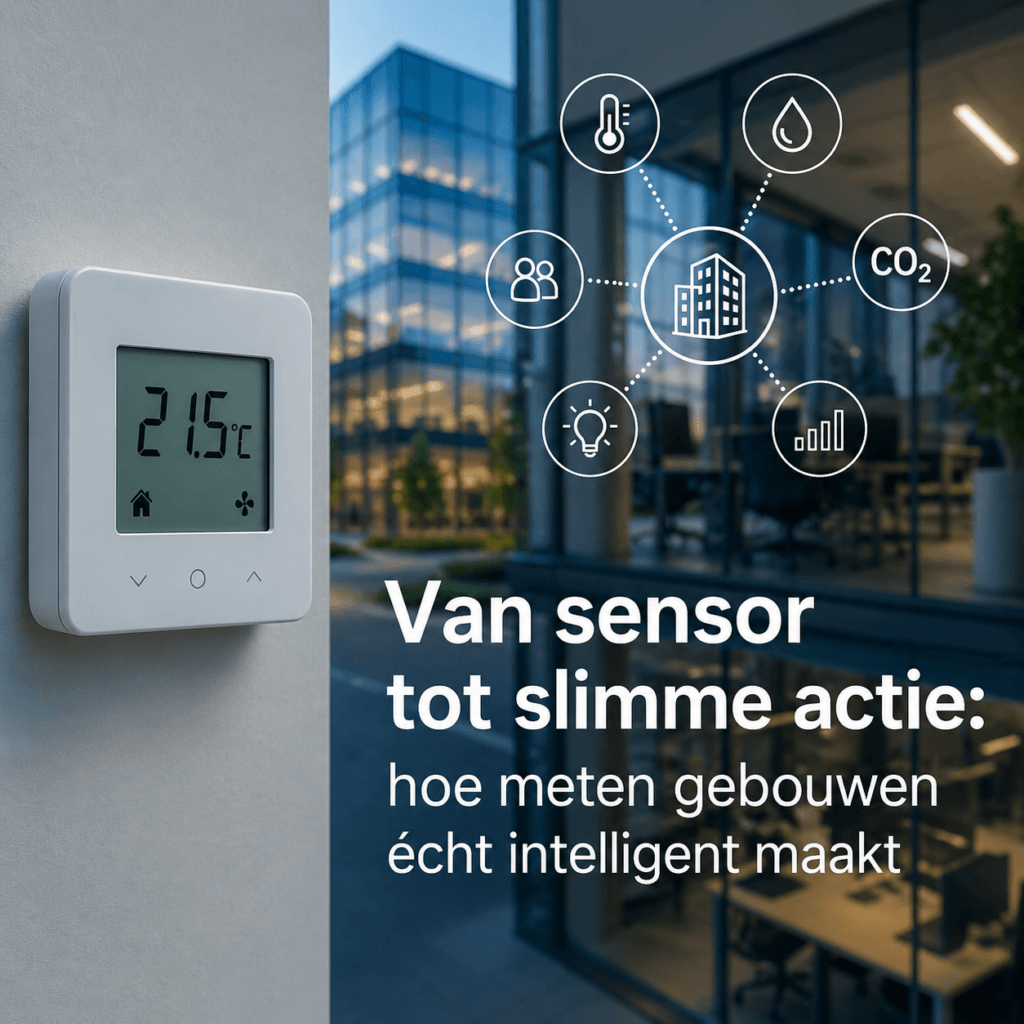
Ventilating buildings consumes energy. Traditional systems often operate at a fixed airflow, whether ten people are in a meeting room or no one. Demand-controlled ventilation, also called DCV (Demand Controlled Ventilation), approaches this differently. The system adjusts the air supply based on what is actually needed. CO₂ and humidity measurements play a central role in this.
What is demand-controlled ventilation (DVC)?
With demand-controlled ventilation, the actual need determines how much fresh air a space receives. Sensors continuously measure the air quality and relay that information to the controller. The controller then adjusts the fans or damper positions. Is a room empty? Then the ventilation flow decreases. Does a meeting room fill up? The system automatically increases ventilation.
The difference with conventional ventilation lies in the control. A standard system works with fixed values or time schedules. DCV responds to what actually happens in the space. That makes the system more flexible and economical in use.
How do CO₂ and humidity measurements work in a DCV system?
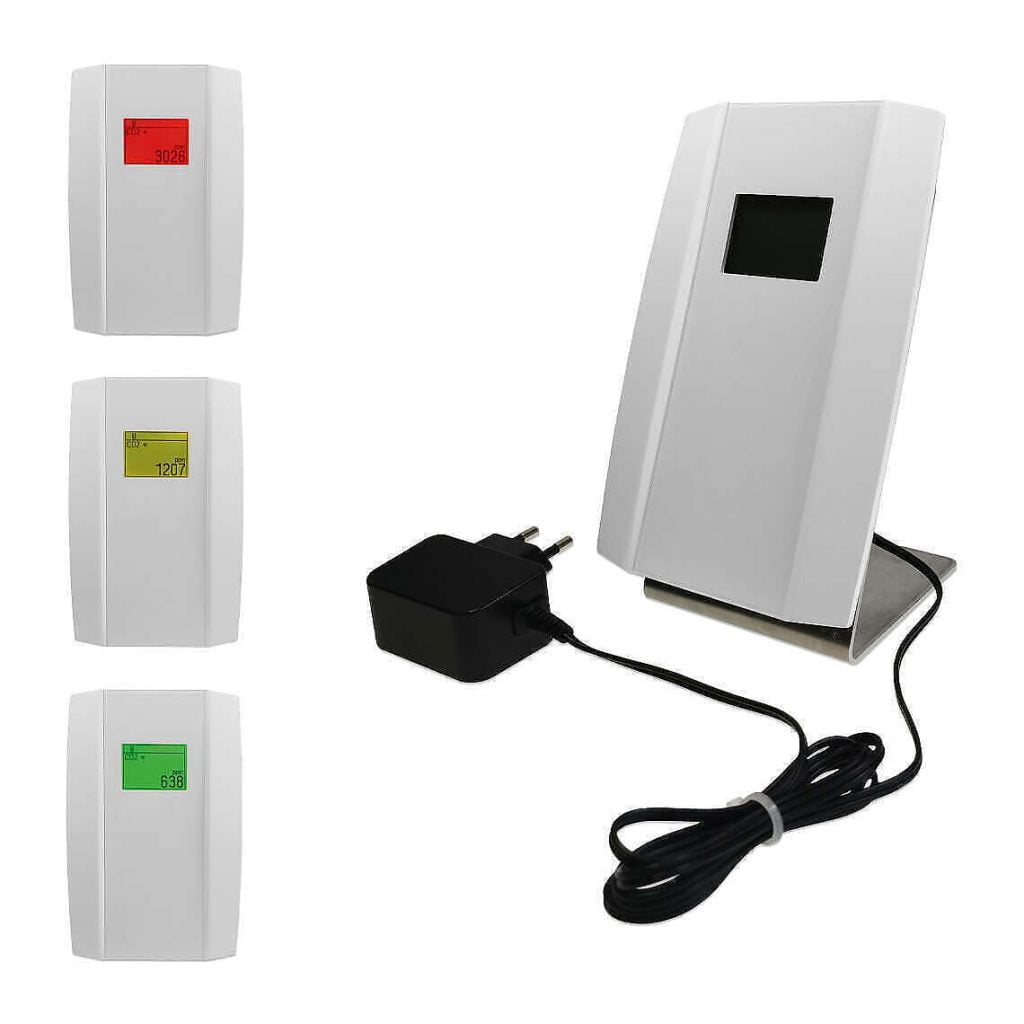
CO₂ and humidity measurements act as the eyes of a DCV system. The CO₂ concentration indicates the occupancy of a space. People exhale CO₂. The more people, the faster the CO₂ level rises. A room sensor measures that concentration in ppm (parts per million). Once the value exceeds a setpoint, the system increases ventilation.
Humidity sensors operate on the same principle, but for relative humidity. In spaces where a lot of moisture is released, humidity can rise quickly. Excessive humidity increases the risk of mold growth and an uncomfortable indoor climate. The sensor signals when the threshold is exceeded.
Both measurements are combined to achieve optimal control. The controller always selects the signal that indicates the highest ventilation demand. This ensures the space always receives sufficient fresh air, whether occupancy or humidity is the driving factor.
The benefits of demand-controlled ventilation
Energy savings by ventilating on demand
Fans are major energy consumers in commercial buildings. By ventilating only when needed, DCV can significantly reduce energy bills. The savings depend on the building type, occupancy rate, and how well the system is configured.
Improved air quality for occupants
A CO₂ concentration above 1000 ppm makes people tired and less alert. With demand-controlled ventilation, air quality is maintained even during well-attended events. Employees perform better in a space with sufficient fresh air.
Lower operational costs
Less running time means less wear on fans, belts, and filters. Maintenance intervals can, in some cases, be extended. In addition, energy costs drop directly with reduced consumption. This combination makes DCV attractive for building owners looking to limit operating expenses.
Which buildings are suitable for DCV with CO₂ and humidity measurements?
Demand-controlled ventilation works best in buildings with variable occupancy. Offices with flexible workspaces, schools, conference centers, and healthcare facilities are typical examples. When rooms are vacant, DCV saves a lot of energy. At peak times, the system guarantees adequate ventilation.
In industrial environments where moisture is a concern, a DCV system with humidity control offers a solution. Think of production halls, storage areas, or swimming pools. Here, humidity control prevents condensation and material damage.
For smaller spaces with constant occupancy, DCV is less cost-effective. A single-occupant office that is occupied all day gains little from demand-controlled control. The investment is then difficult to recover.
Implementing demand-controlled ventilation with the right sensors
A well-functioning DCV system stands or falls with reliable sensors. The CO₂ sensor must measure accurately and remain stable over time. NDIR technology (Non-Dispersive Infrared) is the standard for this. For humidity measurements, capacitive sensors are common, with an accuracy suitable for climate applications.
At Betec Controls we supply CO₂ sensors and humidity sensors suitable for demand-controlled ventilation. From room sensors to duct-mounted transducers, in various designs and with different output signals. Our product specialists are happy to advise you on the right sensor for your DCV application. Contact us or reach us by phone: (055) 20 325 30.
Frequently asked questions about demand-controlled ventilation
How much does a DCV system with CO₂ and humidity sensors cost?
Costs depend on the size of the building and the number of zones you want to control. You need at least one CO₂ sensor per room, optionally supplemented with a humidity sensor. In addition, there is the controller and any modifications to your ventilation system. Contact us for non-binding advice.
Can demand-controlled ventilation be integrated into existing ventilation systems?
In many cases, yes. The condition is that the fans or damper positions are controllable. For systems with a variable-speed fan or modulating dampers, DCV can often be added. Older installations require modifications.
How often should CO₂ and humidity sensors be calibrated?
That varies by manufacturer and sensor type. Many modern CO₂ sensors have automatic baseline correction, making manual calibration less frequently required. For critical applications, manufacturers usually recommend an inspection interval of one to two years.