


Replacing an existing HVAC component with a new type requires more than just the brand and type number. The technical properties of the existing component determine which replacement is suitable. At Betec Controls, when replacing existing field equipment, we also refer to this as retrofit or modernisation. This involves replacing, for example, an actuator, Sensor, or combination of control valve and actuator within an existing climate installation.
To select a suitable replacement, it is important to collect the correct technical data in advance. The data required differs per application.
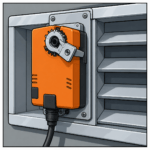 Replacing HVAC components in air-side control technology
In an air-side application, this may involve, for example, an actuator on an air damper. Several properties of the current actuator are important when selecting a replacement type.
Therefore, note at least:
- the current brand, for example Belimo, Siemens, or any other brand;
- the current type number;
- the current voltage;
- the current torque;
- the current stroke length, if applicable;
- the presence of a Safety function or fail-safe function;
- the running time;
- the Management used.
The Management may, for example, be open/closed, 0-10 V, 2-10 V, or communicative Management.
These data help make differences between the existing and potential new actuator clear. Therefore, do not only check the physical Connection or the available torque.
 Replacing an HVAC Sensor
 Replacing an HVAC Sensor
When replacing a Sensor as well, the existing type number is an important starting point. In addition, the Execution and technical properties of the Sensor play a role.
Check, among other things:
- the current brand, for example HK Instruments, Honeywell, Produal, Thermokon ,Belimo, etc.;
- the current type number;
- the presence of a display;
- the length of the probe;
- the DN size, when relevant;
- additional properties.
Additional properties may include, for example, an autozero function or automatic zeroing.
By recording these data in advance, the search for a replacement Sensor can be more targeted. This is especially important when the existing Execution is part of an HVAC or building management system.
Replacing actuators for water-side applications
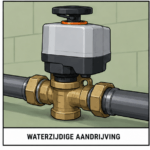 Replacing actuators for water-side applications
Within water-side control technology, partly different selection criteria play a role. A replacement actuator must match both the application and the existing control technology.
Therefore, collect the following data:
- current brand;
- current type;
- current voltage;
- current torque;
- current actuating force;
- current stroke length;
- Safety function or fail-safe function;
- running time;
- Management used.
The Management may, for example, be open/closed, 0-10 V, 2-10 V, or communicative.
Depending on the actuator, not all properties apply. That is precisely why it is important to record as much information as possible about the existing component.
Replacing Control valve and actuator together
Sometimes replacing only the actuator is not sufficient. In a retrofit, it may be necessary to replace both the control valve and the actuator.
In that case, additional data are required.
Data of the existing valve and actuator
Check:
- the current brand, for example Danfoss, ESBE, Honeywell, Belimo, or any other brand;
- the current valve type;
- the current torque;
- the Kvs value;
- the DN size;
- the shaft size;
- the ISO top flange.
The type may be, for example, a butterfly valve, control valve, 2-way valve, or 3-way valve.
For the shaft size, it is important to check which mechanical Connection is present. Think of square, double-D, or keyway.
Also check the ISO top flange. Examples from existing installations are F03, F04, F05, F07, and F10.

Why the existing data are important for retrofit
In HVAC retrofit, the existing situation is the starting point. After all, a new component must match the application, mechanical Execution, and control technology properties of the installation.
A type number alone therefore does not always provide sufficient information. Where possible, also note data from the nameplate and the existing application.
If necessary, take clear photos of the component, the Connection, and the nameplate. This makes it easier to assess the available technical data.
For selecting a suitable replacement, you can also contact us for technical advice. For contact click here or use the chat function!
Need help replacing an existing HVAC component?
Do you want to replace an existing actuator, Sensor, control valve, or combination? Then collect as much of the above data as possible. Betec Controls can use this information as a starting point when searching for a suitable solution for retrofit or modernisation. This allows a targeted assessment of the technical properties that are relevant to the existing HVAC installation.
Do you have any questions? Please contact us or, also nice, use the chat function! We are happy to help.
FAQ
What does retrofit mean in an HVAC installation?
With retrofit, you replace existing components within an installation with new components. In this context, this may involve, for example, actuators, sensors, or control valves.
What data do I need to replace an actuator?
Note, among other things, brand, type, voltage, torque, stroke length, running time, Safety function, and Management. For water-side applications, the actuating force may also be relevant.
Can I replace an old HVAC actuator based only on the type number?
The type number is an important starting point, but the source text also mentions several technical properties. Think of voltage, torque, running time, and Management.
What should I pay attention to when replacing a control valve and actuator?
Check, among other things, the valve type, torque, Kvs value, DN size, shaft size, and the ISO top flange. These data help when assessing a possible replacement.
What data are important when replacing an HVAC Sensor?
Check brand, type, display, probe length, and any DN size. Also note additional properties, such as autozero or automatic zeroing.


