


Energy Valve | Smart pressure-independent control valve with energy metering for HVAC
An Energy Valve is the ultimate smart solution for those looking to combine maximum control, insight, and energy savings in one compact system. This innovative, pressure-independent control valve not only optimizes hydronic control but also measures energy consumption simultaneously. This allows you to manage installations much more efficiently and prevent unnecessary energy loss. Furthermore, the integrated technology ensures that system fluctuations are automatically compensated for. As a result, the installation maintains stable performance, even under variable loads. This is precisely why the Energy Valve is an essential component in modern HVAC installations.
Key features
- Pressure-independent control for stable performance
- Integrated ultrasonic flow sensor for accurate measurement
- Continuous monitoring of flow rate and energy consumption
- Automatic compensation of pressure fluctuations
- Measurement of supply and return temperature (delta T)
- Insight into system performance and energy efficiency
- Reduces energy consumption and optimizes installation behavior
- Available in DN15 to DN150
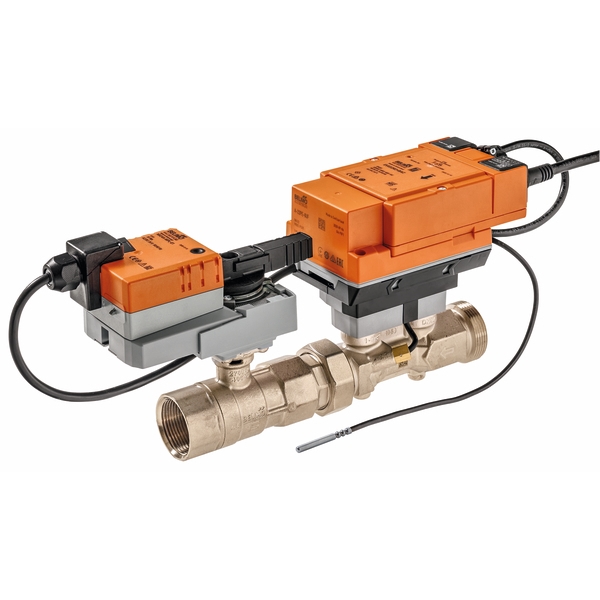
How does an Energy Valve work?
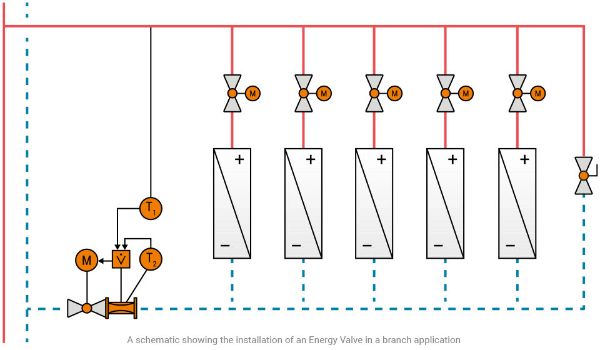
The Energy Valve continuously measures the flow rate using an ultrasonic flow sensor. The valve then uses this data to dynamically adjust the flow. Consequently, pressure differences in the system are automatically corrected. Additionally, temperature sensors in the supply and return pipes measure the temperature difference (delta T). Based on this, the valve calculates the actual energy delivered. This provides you with immediate insight into the efficiency of the installation.
Why is delta T so important?
An optimal delta T is crucial for an efficient installation. When the delta T is too low, more water must be pumped around to transfer the same amount of energy. This significantly increases the energy consumption of pumps. Moreover, a return temperature that is too low (or too high, depending on the application) negatively impacts energy generation. Consider, for example, cooling installations or heat pumps, where efficiency is highly dependent on return conditions. Therefore, the Energy Valve actively helps to prevent the so-called delta T syndrome.
Technical specifications
Property | Value |
|---|---|
Type | Pressure-independent control valve |
Application | HVAC systems |
Measurement | Ultrasonic flow measurement |
Temperature measurement | Supply and return |
Functions | Flow control + energy metering |
DN range | DN15 – DN150 |
Control | Modulating |
Medium | Water (heating/cooling) |
Frequently Asked Questions (FAQ)
What makes an Energy Valve different from a standard control valve?
An Energy Valve combines control and energy metering. This allows you to not only optimize the flow but also gain insight into energy consumption.
Is an Energy Valve truly pressure-independent?
Yes, the valve automatically compensates for pressure fluctuations, ensuring the set flow rate is maintained.
Why is a low delta T a problem?
A low delta T results in a higher flow rate and thus more pumping energy. Additionally, it often reduces the efficiency of energy generation.
Can I read energy consumption in real-time?
Yes, the Energy Valve continuously measures the delivered energy based on flow and temperature difference.
In what sizes is the Energy Valve available?
Most versions are available from DN15 up to and including DN150.
In short, with an Energy Valve, you are not just getting a control valve, but a complete optimization system. This immediately improves efficiency, lowers energy consumption, and gives you full control over your HVAC installation.
Do you have any questions or would you like more information? Contact us! You can reach us via phone, email, or the chat function. 🚀


