What is a building management system (BMS) and how does it work?
More and more buildings are being equipped with smart indoor climate systems. They regulate temperature, save energy, increase comfort. But what exactly is such a building management system? In this article, we explain how a BMS works. We discuss the technology, the components, the benefits. And we will help you make the right choice for your building.
What exactly is a building management system?
A building management system is a network of controllers that together control and monitor all the technical systems in a building. You probably know it as BMS (Building Management System), sometimes also called BAS (Building Automation System) or BMS (Building Management System). Such a system connects heating, ventilation, air conditioning and lighting among other things, plus often other parts such as security, energy consumption, etc. Often there is a central server for management, but the controls run locally in the controllers themselves.
It acts a bit like a conductor for your building. The system continuously collects information: temperatures here, air quality there, energy consumption everywhere. With that data, it controls the various systems. It makes all the systems work together, whereas before they all had their own controls and regulation. So now there is one central point that oversees everything. That makes management a lot clearer and the installations are better coordinated.
The main components of a BMS
A building management system consists of several components that make up the complete system:
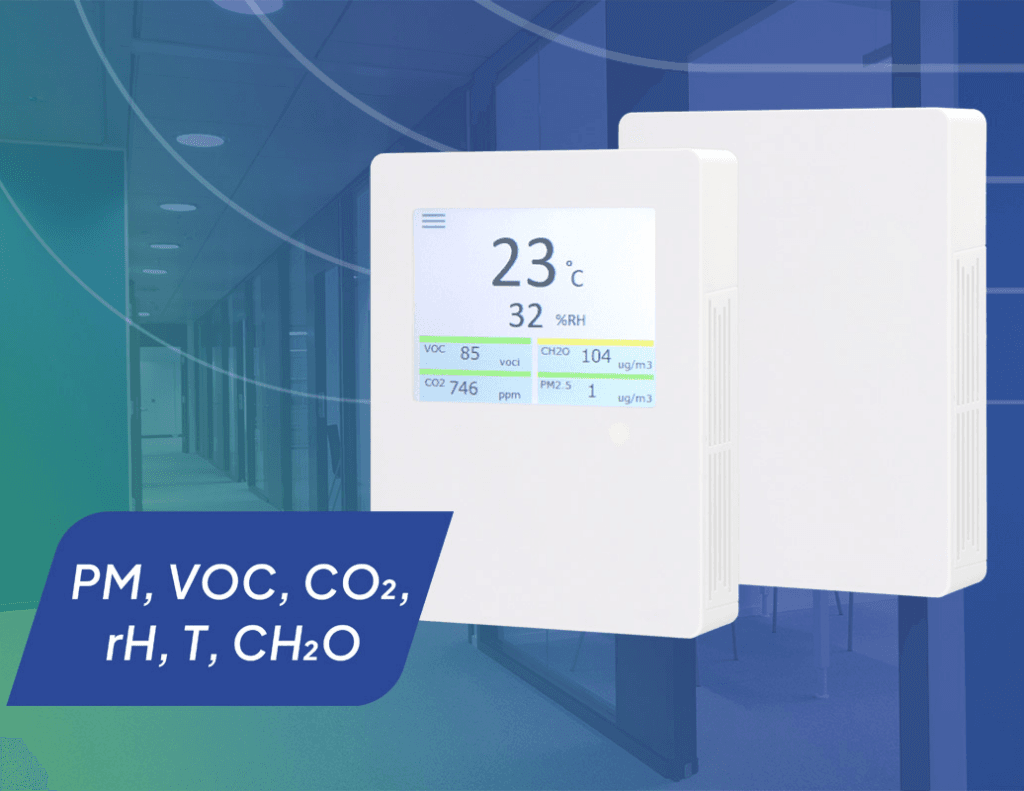
- Sensors: continuously measure conditions in the building. Temperature sensors, CO2 meters, humidity sensors and presence detectors collect data from all rooms. These measured values form the basis for control.
- Controllers: process incoming sensor data and make decisions based on set parameters. If a room measures 23 degrees while 21 degrees is set, the controller calculates what action is needed.
- Actuators: carry out the commands of the controllers. Valve motors regulate flow in heating systems, variable speed drives control fans, servo motors position air dampers. These components provide the actual adjustment of the systems.
- Software/interface: provides user access to the system. Through a control panel, computer or app, monitors the building, adjusts set points and analyzes historical data. Modern interfaces often operate web-based.
- Network: handles communication between components. This is done via bus cables or wireless connections. Standard protocols such as KNX, BACnet or Modbus allow integration of different manufactures.
Benefits of a properly set BMS
A properly functioning building management system provides immediate, measurable benefits to your organization:
Lower energy costs
A BMS optimizes energy consumption by running systems only when needed. Heating automatically goes down in unused rooms, ventilation adjusts to occupancy. Building owners often see substantial savings on their energy bills.
Better indoor environment for users
The system keeps temperature and air quality constantly at desired levels. Employees are more productive in a comfortable work environment. A good climate can then contribute to higher productivity and less absenteeism.
Predictable maintenance
The BMS signals anomalies before systems fail. You see when filters need to be replaced or a pump falters. Preventive maintenance is cheaper than troubleshooting.
Central monitoring and reporting
All data comes together in clear dashboards. You can immediately see where energy is leaking out and how your building is performing. For sustainability reports, you have all the data at hand.
When do you choose which type of building management system?
Choosing a building management system depends on your building, budget and ambitions:
Small office or store (up to about 500 sq. ft.)
Standalone controls per room usually suffice. A programmable thermostat for heating, a separate control for ventilation. The investment remains limited and you still have comfort. A full BAS is often excessive here, unless you have specific technical requirements.
Medium-sized building (500 – 5,000 sq. ft.)
This is where a simple building management system pays off. Several zones, central monitoring via a PC, weekly programs for different departments. For HVAC, a basic Modbus or BACnet solution fits well, KNX you see more with lighting and shading. The additional investment is recouped through energy savings.
Large building or campus (5,000 sq. ft. or more)
A fully integrated BMS becomes almost a given here. With so many installations, users and rooms, you need central control. People often opt for hybrid solutions: local control with the option of cloud management. The higher acquisition costs outweigh the savings and ease of use.
Specific requirements
Hospitals, laboratories or production environments require sophisticated systems. Here there are strict requirements for temperature, humidity, overpressure. Wa
The rule of thumb: the larger and more technically complex your building, the more an integrated system pays off. But your ambitions for energy management also come into play. Start small if that fits, you can always expand.
The right building management system for your situation
At Betec Controls, we are happy to help you with the right components for your BMS. Whether it’s individual temperature controllers for a small office or a complete system integration for a hospital campus. We supply sensors, controllers and actuators of renowned brands that work perfectly together. Our specialists think along with you about the best solution for your situation. Feel free to contact us for advice.
Frequently asked questions about a building management system
What does a building management system cost for my building?
The price of a BMS varies enormously from project to project, from several thousand euros for small offices to substantial investments for large buildings. Energy savings can make the investment profitable, although the payback period varies greatly from one situation to another.
How long does the installation of a BMS take?
For a small building, count on days to weeks. Medium-sized projects require several weeks to months, depending on complexity. Large buildings often require a phased approach.
Will a building management system work with my existing systems?
Modern systems can usually be linked to a BMS via standard protocols. With older systems, integration is sometimes more difficult, in which case additional interfaces or modifications are required. Our specialists will be happy to advise you on what is feasible in your situation. Feel free to call: (055) 20 325 30.